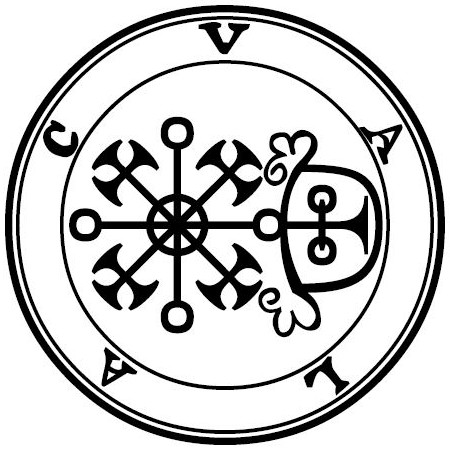
Revealer of hidden treasures and serpent-paths, exposing what lies concealed beneath surface and shadow.
Valac manifests as a luminous figure astride a two-headed dragon, his form shimmering with quicksilver radiance. He appears androgynous, neither fully male nor female, with eyes that see simultaneously in multiple directions. His presence crackles with electrical potential, and the air fills with the hiss of serpents and the whisper of wind through hidden caverns.
His aura reveals invisible layers of reality—the hidden becomes visible in his presence. Treasures glow faintly, paths to concealed places illuminate, and secrets suspended in shadow gain form and substance. Those in his presence experience simultaneous clarity and disorientation, as if seeing too much at once.
Direct perception of hidden valuables and treasures. Valac creates internal compass-sense toward hidden wealth. The conjuror experiences treasure location as magnetic pull, bone-deep certainty rather than visual sight. Works across vast distances and through physical barriers.
Establishes friendly relation with serpents, dragons, and ophidian creatures. These beings serve as scouts, guards, and informants. Particularly useful for accessing remote or magically-protected locations where such creatures naturally dwell.
Pierces all forms of concealment and magical obscuration. Knowledge hidden through time, distance, or protective magic becomes accessible. Most effective when conjuror provides specific object or location to focus the revelation.
The emergence of Valac within the Western grimoire tradition.
Valac emerges in the grimoire tradition as a demon of revelation and hidden knowledge, particularly attuned to the discovery of concealed treasures and the sacred paths where serpents dwell. The demon's unusual appearance as a small child with angel's wings riding a two-headed dragon suggests a paradoxical nature—the innocence of childhood paired with draconic power, the benevolence of wings coupled with the chthonic authority of the serpent. This juxtaposition marks Valac as a bridge between celestial and infernal realms, between surface and subterranean knowledge.
During the medieval period, serpent-paths and hidden treasures occupied significant space in alchemical and hermetic philosophy. Valac represented the demon-guide who could navigate both literal and metaphorical undergrounds, revealing the treasure-hoards that lay beneath ordinary perception and the secret passages through which transformative knowledge flowed. The demon's Mercurial correspondence linked Valac to commerce, communication, and the swift discernment required to distinguish true treasure from illusion.
The demon's presidency over thirty-six legions granted Valac substantial authority within the infernal hierarchy, positioning this entity as a significant power rather than a minor servant. Medieval and Renaissance practitioners sought Valac's aid not merely in locating gold and silver but in discovering the philosophical treasures encoded within alchemical tradition—the secrets of transmutation and the hidden knowledge that transformed understanding itself.
How different sources describe Valac across centuries of compilation.
Valac in art, literature, and the modern imagination.
Historical and modern approaches to working with Valac.
Regardless of method, the irreducible correspondences remain: the seal is dual-winged, the element is Air, the planet is Mercury, the metal is Mercury, and the day is Wednesday. These form the signal beneath the noise of varying approaches.
Valac responds to genuine curiosity and practical need. He dislikes greed without purpose. Best invoked during waxing moon when hidden things gradually become visible. Response typically within seven days.