Master of transmutation and wit, transforming base matter into precious substances through cunning intellect.
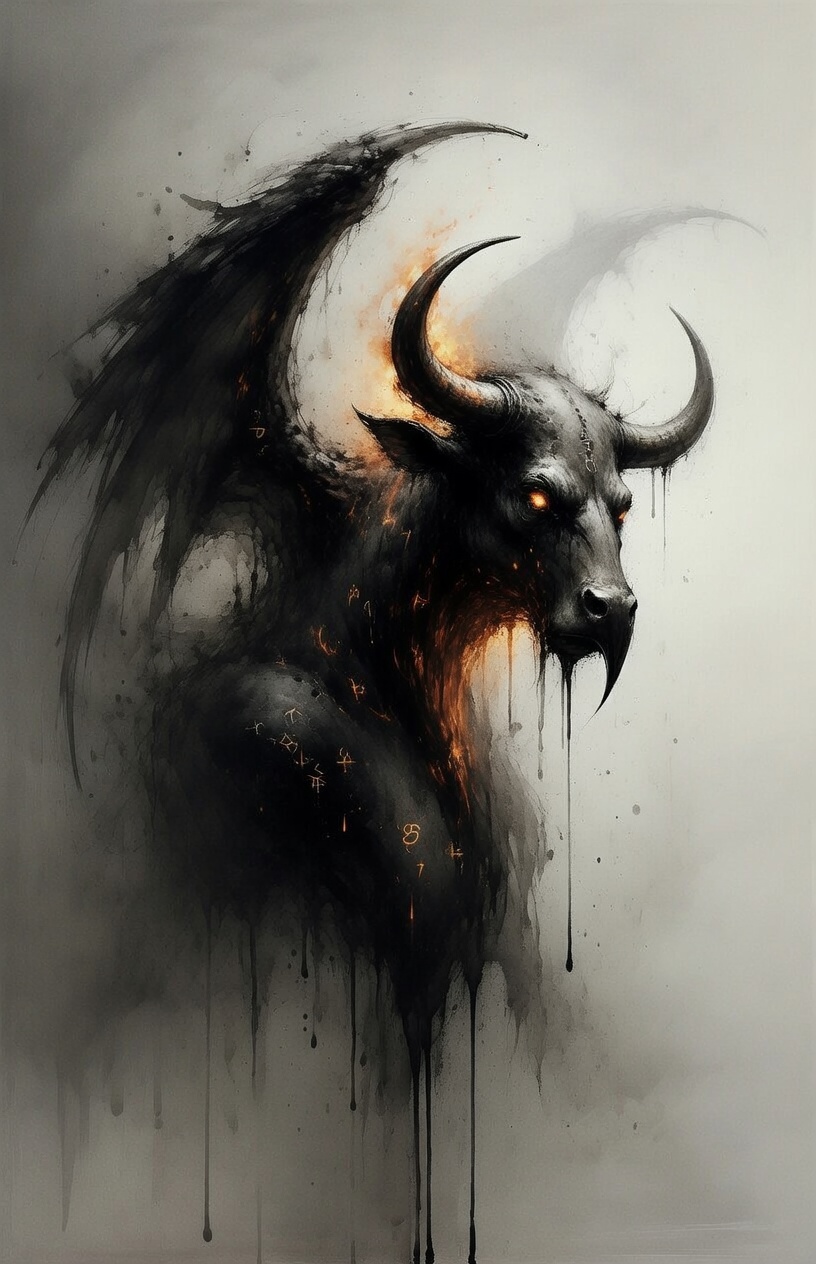
Zagan manifests as a radiant figure wreathed in golden flame, his form shifting between solid and liquid states. He appears first as molten metal, then crystallizes into human shape, his eyes blazing with alchemical knowledge. The air around him shimmers with heat and potential transformation, carrying the scent of sulfur mixed with precious resins.
His presence radiates deceptive charm and intellectual superiority. Zagan's aura pulses with the energy of transmutation, creating visible distortions in reality—matter warps and reforms in his vicinity. Those near him feel simultaneously elevated and unmoored, their thoughts turning slippery and malleable like clay in a kiln.
Direct conversion of one substance into another of greater value or utility. Water becomes wine, lead becomes gold. The transformation requires both material and knowledge as catalysts, binding the conjuror's will into the transmutation.
Acute perception of hidden patterns and mechanisms underlying natural phenomena. Zagan reveals the secret connections between things, the underlying sympathies and correspondences that bind the material world together.
The art of persuasive argument and clever reasoning that makes the inferior argument appear superior. Particularly useful for contracts, negotiations, and situations requiring rhetorical dominance without violence.
The emergence of Zagan within the Western grimoire tradition.
Zagan emerges in the grimoire tradition as a demon of transmutation and wit, embodying the Renaissance pursuit of alchemical transformation and the sharp intellect required to navigate surfaces and deceive surfaces. The demon's dual appearance—first as a bull bearing griffin's wings, then assuming human form—suggests a movement from brute power toward refined intelligence, from base nature toward noble form. This transformation mirrors the alchemical opus itself: the elevation of base matter into precious substances through application of cunning intellect and occult knowledge.
During the medieval and Renaissance periods, Zagan occupied a unique niche among demons associated with transformation. Unlike demons of destruction or coercion, Zagan represented the power to alter the fundamental nature of substances, to convert wine into water and water into wine, to transmute metal into coin. Yet more significantly, Zagan possessed the power to elevate human intellect itself, transforming fools into the wise through the application of wit and discernment. This dual capacity—the transformation of matter and mind—positioned Zagan as a supreme advocate of human potential.
Zagan's solar correspondence and association with kingship granted this demon authority over both material and intellectual domains. Medieval practitioners sought Zagan's aid not merely for alchemical transmutation but for the sharpening of their own wit and the cultivation of the intelligence required to perceive the true nature of reality beneath its manifestations. Zagan embodied the principle that the greatest transmutation occurs not in the crucible but in the minds of those wise enough to invoke its power.
How different sources describe Zagan across centuries of compilation.
Zagan in art, literature, and the modern imagination.
Historical and modern approaches to working with Zagan.
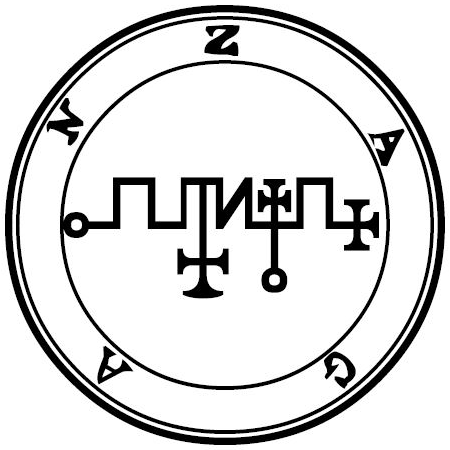
Regardless of method, the irreducible correspondences remain: the seal is the royal sun, the element is Fire, the planet is the Sun, the metal is Gold, and the day is Sunday. These form the signal beneath the noise of varying approaches.
Zagan responds most readily at dawn when sun energy peaks. He favors intellectuals, merchants, and alchemists. Expect his aid within three lunar phases when proper protocol is observed.