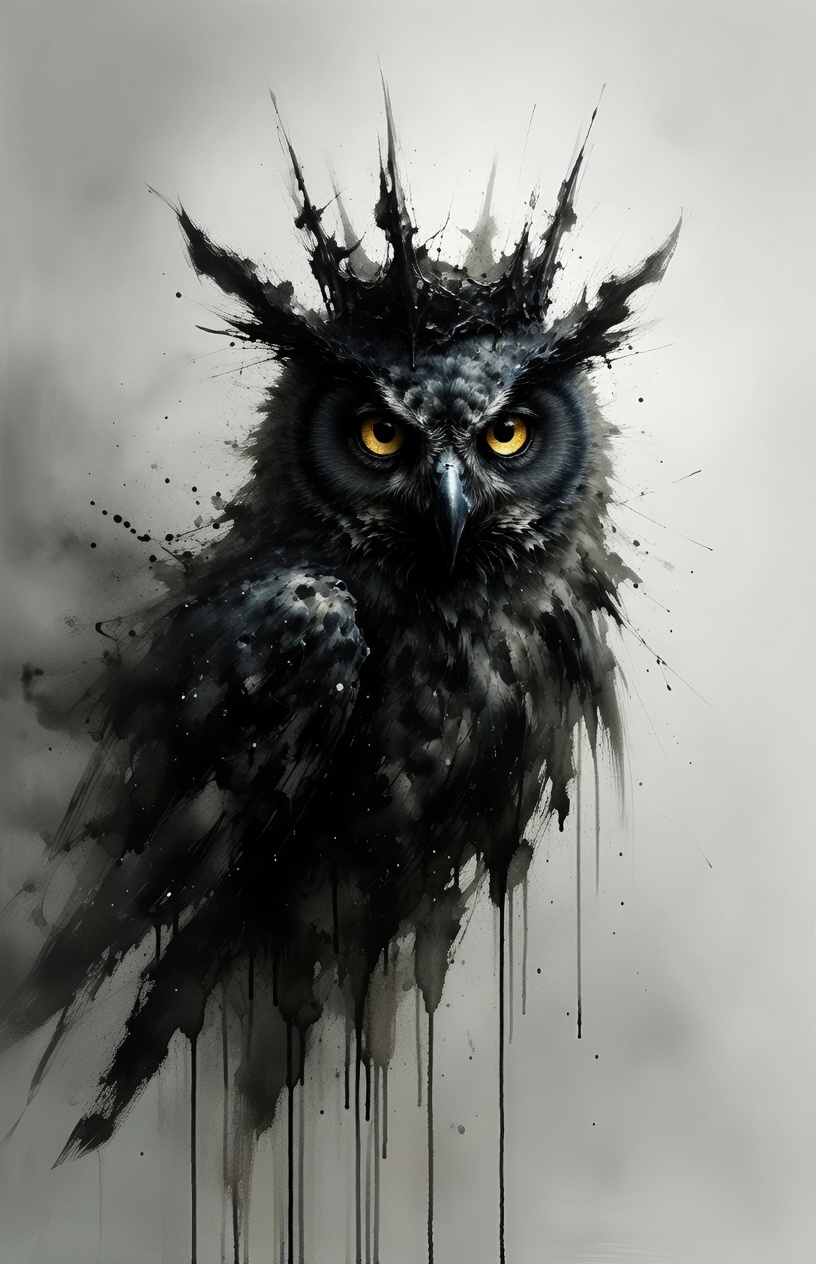
Prince commanding 26 legions, master of astronomy and celestial knowledge, herbs and precious stones through Moon and Saturn's mysteries.
Stolas manifests as a figure of celestial mystery and earthly wisdom—sometimes appearing as a sage crowned with stars, sometimes as a healer surrounded by glowing herbs and crystals. His form carries the quality of night-sky knowledge and deep-earth secrets unified. Stars seem to shine from within his eyes; his presence carries the scent of night-blooming flowers and mineral stone. His robes shimmer with constellations; his movements carry the precision of celestial mechanics and the grace of growing things.
Stolas's presence evokes profound peace and the satisfaction of understanding how heaven and earth relate. Those near him feel the harmony between cosmic cycles and earthly growing things. His aura suggests both the vastness of celestial space and the intimate knowledge of herb-lore and stone-wisdom—the macrocosm reflected perfectly in the microcosm.
Grants mastery of astronomy, astrology, and the language of stars. Stolas teaches how celestial cycles influence earthly affairs. The positions of planets and stars become transparent; their meanings unmask themselves to practitioners.
Reveals the properties and uses of all plants, especially their healing applications. Stolas teaches correspondence between herbs and planets, stones and seasons. Plant-wisdom becomes intuitive and complete.
Opens understanding of precious stones and their properties—terrestrial minerals and their celestial correspondences. Stolas teaches how stones align with planetary forces and enhance magical work.
The emergence of Stolas within the Western grimoire tradition.
Stolas appears in the major European grimoire compilations of the sixteenth and seventeenth centuries, cataloged as the Prince of the Goetia's infernal hierarchy. The spirit commands 36 legions and holds dominion over matters of teaches astronomy and liberal arts.
The name Stolas does not appear in pre-medieval sources with certainty, suggesting this spirit may represent a later codification of older folk beliefs about elemental water spirits, planetary jupiter intelligences, or localized spirits of place that were systematized during the great period of grimoire compilation.
What is certain is that by the time Johann Weyer published the Pseudomonarchia Daemonum in 1577, Stolas had been assigned a fixed position in the hierarchy, specific powers, and a defined method of conjuration — details that would be refined but largely preserved in the later Ars Goetia.
How different sources describe Stolas across centuries of compilation.
Stolas in art, literature, and the modern imagination.
Historical and modern approaches to working with Stolas.
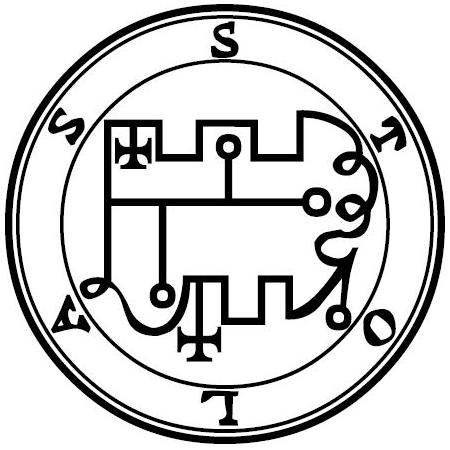
Regardless of method, the irreducible correspondences remain: the seal is central, the element is Water, the planet is Jupiter, the metal is tin, and the day is Thursday. These form the signal beneath the noise of varying approaches.
Stolas responds to those calling under the night sky, particularly during significant lunar phases or when celestial events align. He favors astronomers, herbalists, healers, and those engaged in both cosmic and earthly study. He appears most readily during evening hours or when the Moon is visible, and responds through dreams and sudden understanding during plant or stone observation.