Marquis and Earl commanding 19 legions, master of languages, loyal servants, and clear understanding through Mercury's quicksilver influence.
Ronove manifests as an endlessly shifting figure—now appearing as an elderly scholar in travelling robes, now as a young messenger with quicksilver eyes. His form is precise but never still; the air around him shimmers with the quality of words unspoken and meanings not yet revealed. Feathered wings unfold from his shoulders in patterns that echo both bird and letter-forms. Where he moves, the temperature drops slightly—the cooling clarity of thought.
A sense of pristine understanding radiates from Ronove. Those in his presence feel mental fog lifting; complex situations suddenly make sense. His presence carries the efficiency of Mercury, the planet of communication, commerce, and swift understanding. There is absolute clarity without judgment.
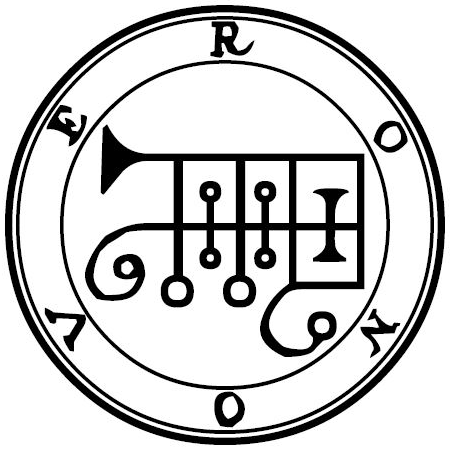
Grants instant comprehension of any language—written or spoken—and the ability to respond with perfect fluency. Works on ancient languages, modern dialects, and coded communications. Understanding emerges at Mercury-speed.
Creates genuine loyalty in willing associates and servants. Those bound to you through Ronove's influence serve with competence and dedication. Relationships become transparent and mutually beneficial.
Pierces through confusion, deception, and complexity to reveal pure truth. Useful for negotiations, scholarship, legal matters, and any situation requiring perfect understanding and communication.
The emergence of Ronove within the Western grimoire tradition.
Ronove appears in the major European grimoire compilations of the sixteenth and seventeenth centuries, cataloged as the Marquis and Earl of the Goetia's infernal hierarchy. The spirit commands 30 legions and holds dominion over matters of teaches languages and sciences.
The name Ronove does not appear in pre-medieval sources with certainty, suggesting this spirit may represent a later codification of older folk beliefs about elemental air spirits, planetary moon intelligences, or localized spirits of place that were systematized during the great period of grimoire compilation.
What is certain is that by the time Johann Weyer published the Pseudomonarchia Daemonum in 1577, Ronove had been assigned a fixed position in the hierarchy, specific powers, and a defined method of conjuration — details that would be refined but largely preserved in the later Ars Goetia.
How different sources describe Ronove across centuries of compilation.
Ronove in art, literature, and the modern imagination.
Historical and modern approaches to working with Ronove.
Regardless of method, the irreducible correspondences remain: the seal is central, the element is Air, the planet is Moon, the metal is silver, and the day is Monday. These form the signal beneath the noise of varying approaches.
Ronove responds swiftly to those calling during Mercury hours (sunrise, afternoon). He favors scholars, traders, diplomats, and those engaged in honest communication and commerce. He appears within hours of true need.