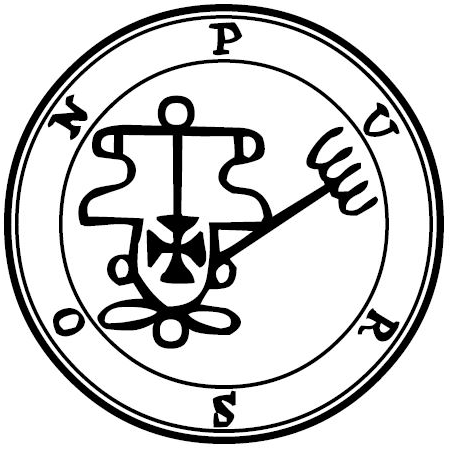
A king of fire whose dominion encompasses hidden knowledge, buried treasure, invisible familiars, and the summoning of powerful guardian spirits.
Purson manifests as a crowned figure wreathed in flame, appearing sometimes as a warrior king, sometimes as a merchant trader laden with ancient wealth. The demon's presence brings the smell of burning gold, spiced incense, and the scent of very old libraries. Those in Purson's presence experience an overwhelming sense of invisible presences—guardians and familiars waiting to serve.
The demon's aura radiates both hidden knowledge and material reward. Unlike demons of love or warfare, Purson carries the sense of a great king who has accumulated vast resources and selects favored servants. The demon's presence suggests opportunity that comes with obligations and the constant attention of unseen watchers.
Purson can perceive the location and nature of hidden treasures—whether literal wealth or lost knowledge. The demon serves as finder and revealer of what was lost or concealed.
Purson can bind powerful spirits to serve an individual as permanent familiars—guardian spirits who provide protection, information, and supernatural assistance.
The demon grants the ability to perceive hidden things—secret rooms, concealed knowledge, spiritual presences. This sight is overwhelming and dangerous; once possessed, the summoner cannot un-see the hidden.
The emergence of Purson within the Western grimoire tradition.
Purson appears in the major European grimoire compilations of the sixteenth and seventeenth centuries, cataloged as the King of the Goetia's infernal hierarchy. The spirit commands 25 legions and holds dominion over matters of reveals hidden treasures.
The name Purson does not appear in pre-medieval sources with certainty, suggesting this spirit may represent a later codification of older folk beliefs about elemental fire spirits, planetary sun intelligences, or localized spirits of place that were systematized during the great period of grimoire compilation.
What is certain is that by the time Johann Weyer published the Pseudomonarchia Daemonum in 1577, Purson had been assigned a fixed position in the hierarchy, specific powers, and a defined method of conjuration — details that would be refined but largely preserved in the later Ars Goetia.
How different sources describe Purson across centuries of compilation.
Purson in art, literature, and the modern imagination.
Historical and modern approaches to working with Purson.
Regardless of method, the irreducible correspondences remain: the seal is central, the element is Fire, the planet is Sun, the metal is gold, and the day is Sunday. These form the signal beneath the noise of varying approaches.
Purson responds most readily to those seeking genuine knowledge or assistance with legitimate pursuits, particularly when invoked with respect befitting a king.