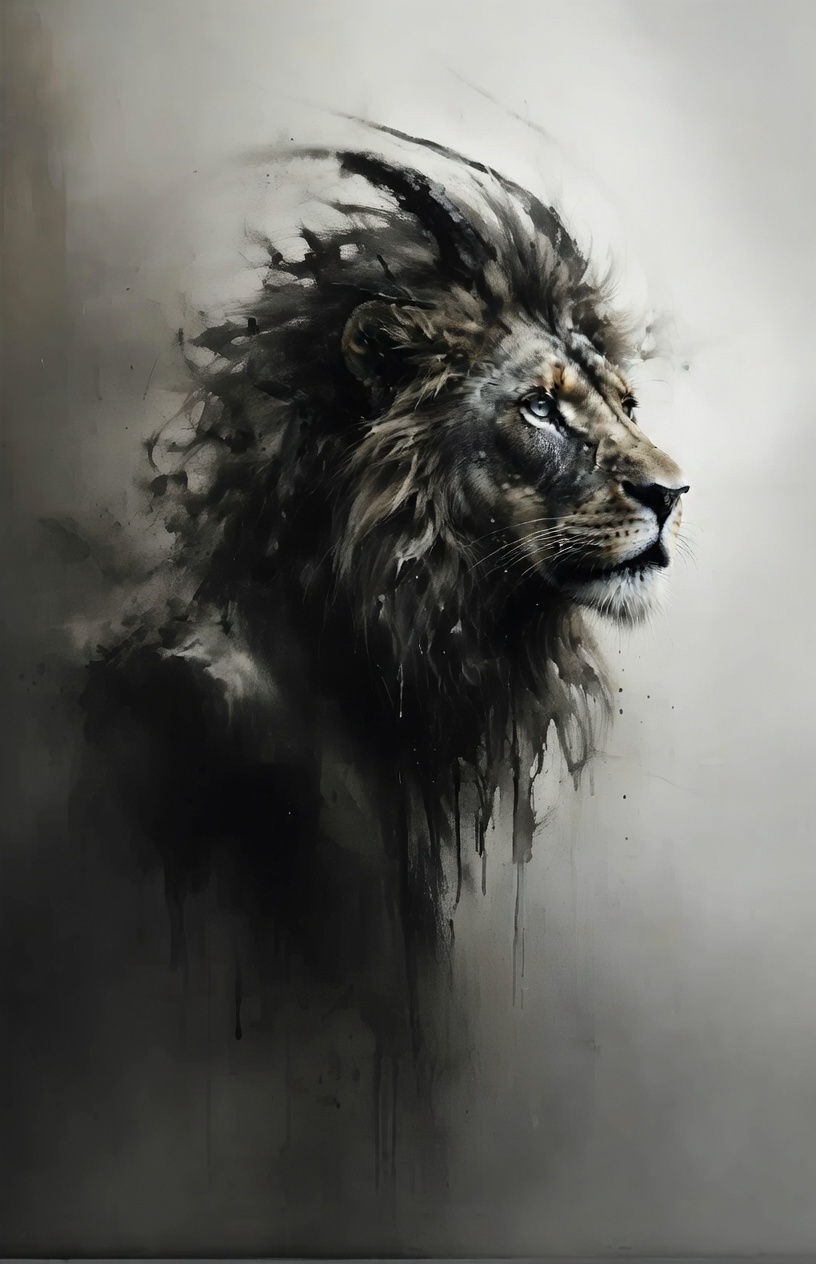
Master of diseases and their cures, granting knowledge of anatomy, mechanical arts, and forces governing health and transformation.
Marbas manifests as a figure of constant transformation, sometimes appearing as a lion, sometimes as a human scholar. His presence fills the air with the scent of quicksilver and burning herbs. When invoked, those nearby experience unusual clarity regarding their bodies—becoming aware of subtle imbalances and hidden tensions. His eyes shift color as they reflect different light, never settling on a single hue.
His aura crackles with contained energy, simultaneously healing and piercing. There exists an almost unsettling precision about his presence—every gesture calculated, every word laden with multiple meanings. Time moves differently in his vicinity; transformation processes accelerate. The space around him feels like a living laboratory where subtle forces constantly recalibrate.
Marbas grants profound understanding of human anatomy, physiology, and pathology. The practitioner grasps not merely mechanical structure but subtle energetic and emotional factors underlying disease. Knowledge extends to diagnosis of hidden conditions, understanding treatment protocols, and recognizing psychological roots of physical illness. Healers working with Marbas access information far beyond formal training.
The spirit confers mastery of mechanical systems, engineering principles, and technical arts. Practitioners gain intuitive understanding of how complex machines work, enabling both repair of mechanisms and invention of new devices. Power operates through sympathetic knowledge—understanding the spirit or intention behind mechanical function.
Beyond conventional medicine, Marbas teaches the art of reading correspondences and hidden connections. He reveals how diseases arise from imbalance in the four elements, from sympathetic causes at distance, from discord between intention and action. Once diagnosed through this lens, cures become obvious—restore balance, harmonize discordant forces.
The emergence of Marbas within the Western grimoire tradition.
Marbas appears in the major European grimoire compilations of the sixteenth and seventeenth centuries, cataloged as the President of the Goetia's infernal hierarchy. The spirit commands 36 legions and holds dominion over matters of causes and cures diseases.
The name Marbas does not appear in pre-medieval sources with certainty, suggesting this spirit may represent a later codification of older folk beliefs about elemental fire spirits, planetary mercury intelligences, or localized spirits of place that were systematized during the great period of grimoire compilation.
What is certain is that by the time Johann Weyer published the Pseudomonarchia Daemonum in 1577, Marbas had been assigned a fixed position in the hierarchy, specific powers, and a defined method of conjuration — details that would be refined but largely preserved in the later Ars Goetia.
How different sources describe Marbas across centuries of compilation.
Marbas in art, literature, and the modern imagination.
Historical and modern approaches to working with Marbas.
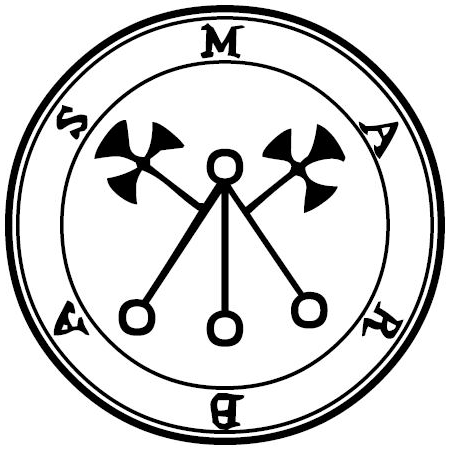
Regardless of method, the irreducible correspondences remain: the seal is central, the element is Fire, the planet is Mercury, the metal is mercury, and the day is Wednesday. These form the signal beneath the noise of varying approaches.
Marbas responds most readily to those engaged in healing or creation work. He favors those approaching with respect for complexity rather than desire for quick fixes.