A marquis of fire who presides over warfare, bloodshed, and the invisible wounds that linger long after battles end.
Leraje manifests as a battle-worn warrior emerging from smoke and cinder, their form bearing the accumulated scars of a thousand conflicts. Some witnesses describe them as female, others as male, and still others report experiencing both simultaneously. Their armor glows with the heat of freshly-forged metal, and their presence carries the acrid smell of burned flesh, sulfur, and iron-rich blood. A sound like clashing swords echoes silently in the mind of those who perceive them.
Their aura crackles with barely-contained violence, yet a terrible clarity accompanies it—the clarity of one who has seen all possible outcomes of conflict and chosen the most efficient path. Those in their presence experience both exhilaration and deep, bone-level fear, as though witnessing the perfect embodiment of martial dominion.
Leraje can inflict injuries that do not immediately manifest—sickness that arrives weeks later, emotional trauma that compounds over time, spiritual damage that accumulates in layers. The most dangerous aspect of this power is its delayed onset; the victim may not realize they are wounded until the damage has become severe.
The demon grants those who invoke them perfect clarity regarding enemy intentions, troop movements, and strategic vulnerabilities. This clarity extends beyond normal intelligence-gathering into something more like reading the structure of conflict itself.
Leraje commands exactly thirty legions of warlike spirits, each skilled in different aspects of combat and destruction. These spirits can be deployed to create chaos, amplify existing conflict, weaken opposing forces, or orchestrate elaborate strategic campaigns.
The emergence of Leraje within the Western grimoire tradition.
Leraje appears in the major European grimoire compilations of the sixteenth and seventeenth centuries, cataloged as the Marquis of the Goetia's infernal hierarchy. The spirit commands 30 legions and holds dominion over matters of causes warfare and great battles.
The name Leraje does not appear in pre-medieval sources with certainty, suggesting this spirit may represent a later codification of older folk beliefs about elemental fire spirits, planetary moon intelligences, or localized spirits of place that were systematized during the great period of grimoire compilation.
What is certain is that by the time Johann Weyer published the Pseudomonarchia Daemonum in 1577, Leraje had been assigned a fixed position in the hierarchy, specific powers, and a defined method of conjuration — details that would be refined but largely preserved in the later Ars Goetia.
How different sources describe Leraje across centuries of compilation.
Leraje in art, literature, and the modern imagination.
Historical and modern approaches to working with Leraje.
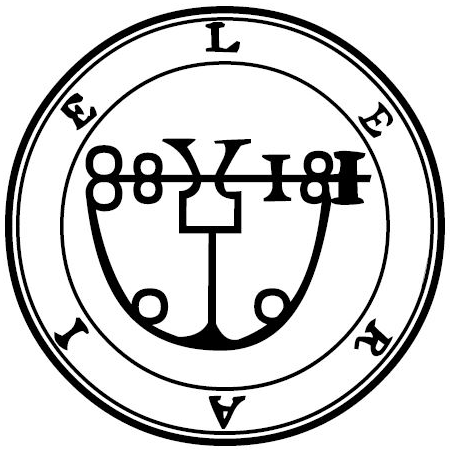
Regardless of method, the irreducible correspondences remain: the seal is central, the element is Fire, the planet is Moon, the metal is silver, and the day is Monday. These form the signal beneath the noise of varying approaches.
Leraje responds to invocations made in places of conflict or historical battlefields, particularly during the waning moon when old wounds tend to resurface.