A duke of the air who reveals hidden truths, manipulates hidden forces in warfare, and exposes what others wish to conceal.
Eligos manifests as a figure composed of swirling wind and shadow, sometimes appearing as an archer wielding invisible arrows, sometimes as a knight on a pale horse whose hoofbeats make no sound. Their form is difficult to focus upon—the eye slides away, the attention wavers, as though the demon exists slightly out of phase with normal perception. When they speak, their voice echoes as though coming from multiple distances simultaneously.
The air currents shift around Eligos in ways that seem deliberately obfuscating, making the space around them feel larger and stranger than it should be. Those in their presence experience sudden clarity about hidden motivations, concealed information, and the unspoken tensions underlying situations. The demon carries the scent of wind before a storm and the metallic taste of high altitude.
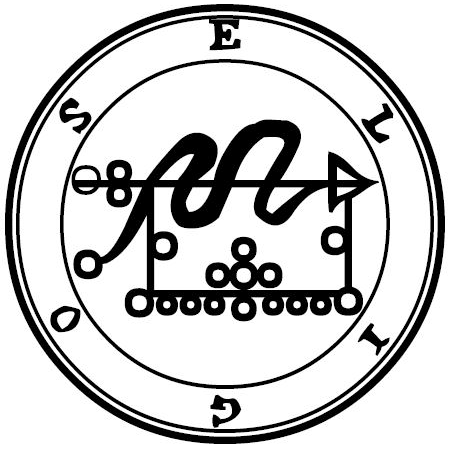
Eligos compels the revelation of secrets that others have worked to conceal. Lies become transparent, hidden motivations surface, and the truth emerges with the inevitability of wind blowing away clouds. This power works best on those who have something genuinely significant to hide.
The demon grants comprehensive understanding of hidden tactical approaches, the art of appearing where unexpected, striking from concealment, and moving invisibly through hostile terrain. Armies and individuals alike can employ this knowledge to gain devastating advantage.
Eligos can convey complex information across vast distances through means that leave no physical trace—whispered on the wind, carried by birds, transmitted through invisible currents of air itself. Messages reach their destination with certainty, yet leave no evidence.
The emergence of Eligos within the Western grimoire tradition.
Eligos appears in the major European grimoire compilations of the sixteenth and seventeenth centuries, cataloged as the Duke of the Goetia's infernal hierarchy. The spirit commands 60 legions and holds dominion over matters of grants hidden knowledge and military victory.
The name Eligos does not appear in pre-medieval sources with certainty, suggesting this spirit may represent a later codification of older folk beliefs about elemental air spirits, planetary venus intelligences, or localized spirits of place that were systematized during the great period of grimoire compilation.
What is certain is that by the time Johann Weyer published the Pseudomonarchia Daemonum in 1577, Eligos had been assigned a fixed position in the hierarchy, specific powers, and a defined method of conjuration — details that would be refined but largely preserved in the later Ars Goetia.
How different sources describe Eligos across centuries of compilation.
Eligos in art, literature, and the modern imagination.
Historical and modern approaches to working with Eligos.
Regardless of method, the irreducible correspondences remain: the seal is central, the element is Air, the planet is Venus, the metal is copper, and the day is Friday. These form the signal beneath the noise of varying approaches.
Eligos responds most readily to those who seek genuine knowledge rather than mere advantage, and to invocations made during wind-storms or dawn hours.