A solar king commanding legions who dominates hearts through desire, magnetism, and irresistible romantic compulsion across realms.
Beleth manifests as a figure wreathed in golden flame, appearing sometimes as a crowned monarch of indeterminate gender, sometimes as a luminous humanoid whose form shifts between masculine and feminine presentation. The air around him ignites with warmth. His presence carries the intoxicating scent of amber, rose, and burning sandalwood. Those who witness his arrival report an immediate acceleration of heartbeat, an involuntary flushing of skin, an overwhelming sense of being the sole focus of cosmic attention.
His aura projects raw magnetism—a palpable force that draws living things toward him as iron to lodestone. Witnesses describe witnessing the demon's arrival as simultaneously terrifying and seductive, a paradox that mirrors his fundamental nature: destruction masquerading as desire, dominion dressed as romance.
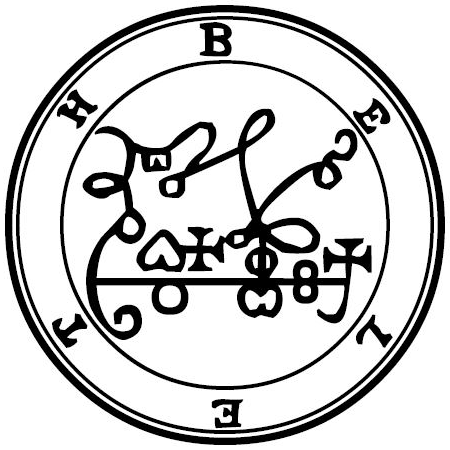
Beleth forces the involuntary quickening of the human heart, causing the target to experience overwhelming passion, jealousy, and obsessive fixation. The victim's emotional state becomes entirely subject to the demon's will, their desires redirected toward whoever Beleth designates.
The demon creates supernatural romantic bonds between two people, sealing them through supernatural affinity. Such unions burn with unusual intensity but often consume themselves through jealousy, possessiveness, and eventual devastation.
Beleth commands eighty-five subordinate spirits, each capable of independently spreading lust, longing, and romantic obsession. These spirits work simultaneously across vast territories, making Beleth's influence pervasive and nearly impossible to contain.
The emergence of Beleth within the Western grimoire tradition.
Beleth appears in the major European grimoire compilations of the sixteenth and seventeenth centuries, cataloged as the King of the Goetia's infernal hierarchy. The spirit commands 85 legions and holds dominion over matters of commands love and desire.
The name Beleth does not appear in pre-medieval sources with certainty, suggesting this spirit may represent a later codification of older folk beliefs about elemental fire spirits, planetary sun intelligences, or localized spirits of place that were systematized during the great period of grimoire compilation.
What is certain is that by the time Johann Weyer published the Pseudomonarchia Daemonum in 1577, Beleth had been assigned a fixed position in the hierarchy, specific powers, and a defined method of conjuration — details that would be refined but largely preserved in the later Ars Goetia.
How different sources describe Beleth across centuries of compilation.
Beleth in art, literature, and the modern imagination.
Historical and modern approaches to working with Beleth.
Regardless of method, the irreducible correspondences remain: the seal is central, the element is Fire, the planet is Sun, the metal is gold, and the day is Sunday. These form the signal beneath the noise of varying approaches.
Beleth responds most readily at sunset and during Venus hours, particularly when the summoner is themselves experiencing genuine romantic distress or desire.