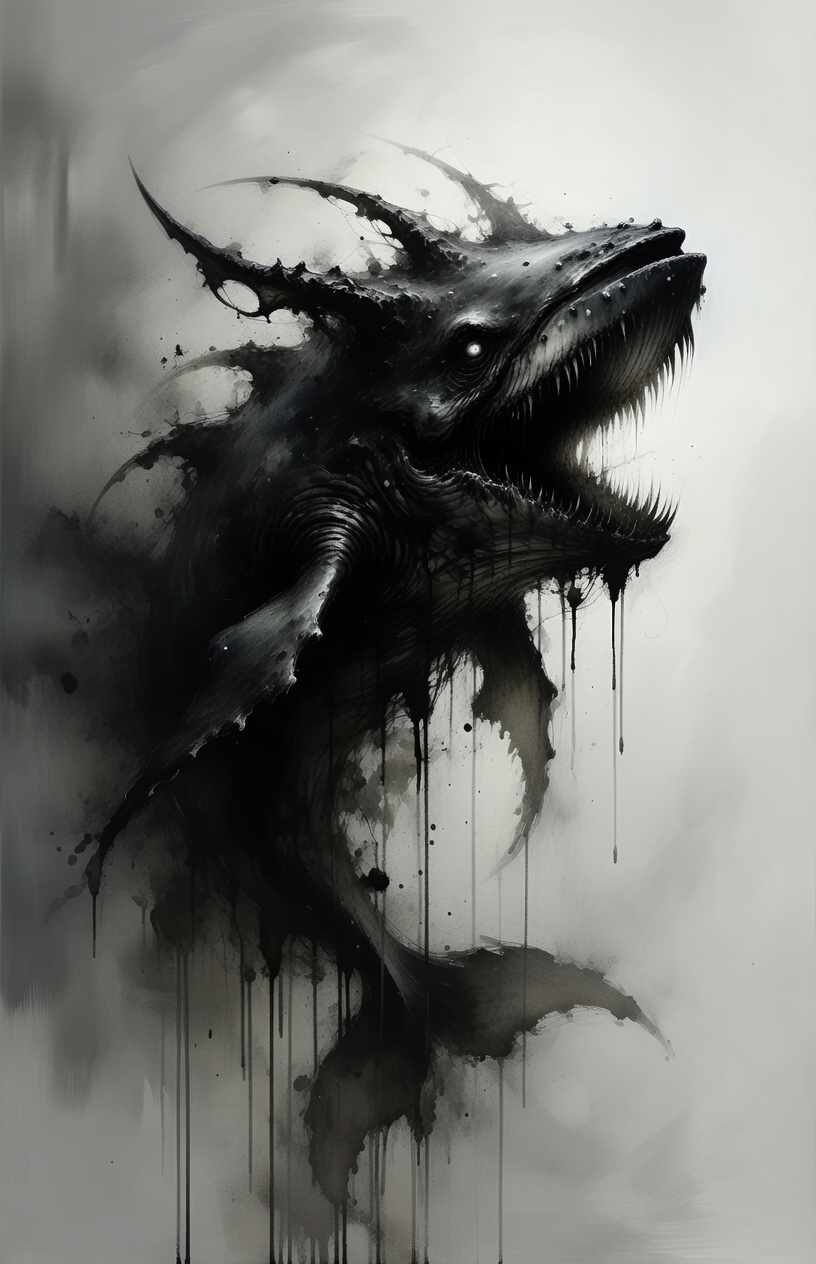
Marquis commanding 29 legions, master of rhetoric and languages, reputation, and eloquent persuasion through Water and Moon's tidal influence.
Forneus manifests as a figure wreathed in water and moonlight—sometimes appearing as a wise sea-creature, sometimes as an orator of hypnotic grace. His form shifts like tides, never quite fixed yet always present. His voice carries the quality of lapping waves and distant song; each word seems to carry memories and half-forgotten truths. Pearls of water fall from his fingers, and the air around him tastes of salt and possibility. His presence suggests both the depths of the sea and the openness of the speaking square.
Forneus's presence evokes profound persuasiveness and the transformative power of words. Those near him feel compelled to listen, to understand the deeper meaning beneath surface words. His aura suggests both fluidity and power—the way water moves mountains through persistence and adaptation.
Grants eloquence and rhetorical mastery that compels listeners. Words flow with perfect persuasion; audiences find themselves moved to agreement or action without fully understanding why. Useful for public speaking, negotiation, and influence.
Provides instant comprehension and fluency in any language. Forneus grants not just grammar but the emotional and cultural resonance that makes speech authentic and persuasive to native speakers.
Shapes perception and builds reputation through strategic communication. Those favored by Forneus find their names carry weight and respect; false claims are avoided in favor of true power authentically presented.
The emergence of Forneus within the Western grimoire tradition.
Forneus appears in the major European grimoire compilations of the sixteenth and seventeenth centuries, cataloged as the Marquis of the Goetia's infernal hierarchy. The spirit commands 30 legions and holds dominion over matters of teaches rhetoric and languages.
The name Forneus does not appear in pre-medieval sources with certainty, suggesting this spirit may represent a later codification of older folk beliefs about elemental water spirits, planetary moon intelligences, or localized spirits of place that were systematized during the great period of grimoire compilation.
What is certain is that by the time Johann Weyer published the Pseudomonarchia Daemonum in 1577, Forneus had been assigned a fixed position in the hierarchy, specific powers, and a defined method of conjuration — details that would be refined but largely preserved in the later Ars Goetia.
How different sources describe Forneus across centuries of compilation.
Forneus in art, literature, and the modern imagination.
Historical and modern approaches to working with Forneus.
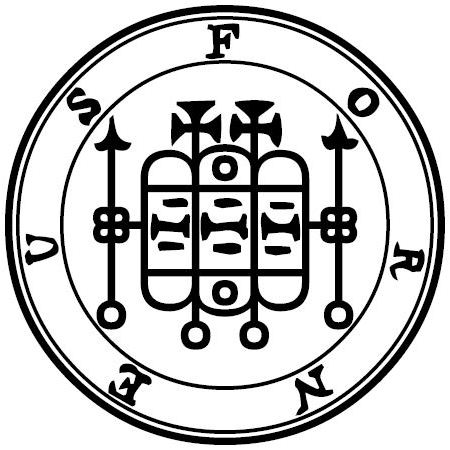
Regardless of method, the irreducible correspondences remain: the seal is central, the element is Water, the planet is Moon, the metal is silver, and the day is Monday. These form the signal beneath the noise of varying approaches.
Forneus responds readily to those calling near water—rivers, lakes, or the sea. He favors orators, teachers, diplomats, and those engaged in genuine communication and persuasion. He appears most readily during evening hours or when the moon is visible and seems particularly accessible to those speaking near gatherings of people.