A duke of the air whose knowledge encompasses the properties and powers of all natural things, herbs, stones, and their hidden virtues.
Bathin manifests as a figure whose form seems to shift between organic and crystalline structures—sometimes appearing as a humanoid made of flowing plants and vines, sometimes as a being composed of geometric stones and minerals. Their presence brings the smell of growing things, rich earth, and the faint mineral scent of caves. Those who encounter Bathin report a sudden amplification of sensory perception, as though they can perceive the hidden properties and essences of all living and mineral things around them.
The demon's aura suggests profound knowledge concentrated in a form barely large enough to contain it. Being near Bathin feels like standing in a vast library where all knowledge is organized according to natural categories. The demon radiates neither malice nor benevolence but rather pure, impartial understanding of how the world actually functions.
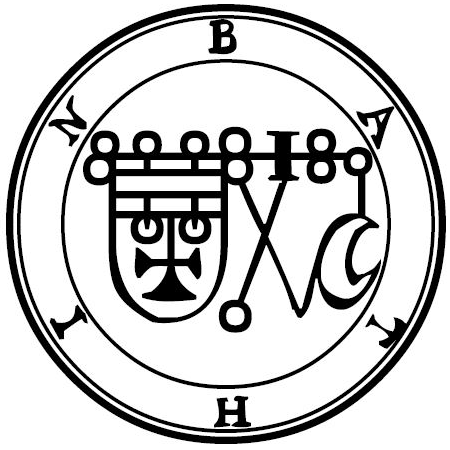
Bathin can instantly perceive the true properties of any substance—whether a plant, mineral, or compound mixture. The demon perceives not merely the chemical composition but the essence and subtle qualities that give each substance its unique character and power.
Bathin commands spirits capable of transporting people and objects across vast distances with extraordinary speed. The method of transport is mysterious, sometimes involving physical travel that seems instantaneous.
Bathin commands twenty-five legions of spirits, each attuned to a different dimension of natural knowledge. These spirits can identify unknown materials or teach the practices and properties of specific herbs and minerals.
The emergence of Bathin within the Western grimoire tradition.
Bathin appears in the major European grimoire compilations of the sixteenth and seventeenth centuries, cataloged as the Duke of the Goetia's infernal hierarchy. The spirit commands 25 legions and holds dominion over matters of teaches herbs, stones, and virtues.
The name Bathin does not appear in pre-medieval sources with certainty, suggesting this spirit may represent a later codification of older folk beliefs about elemental air spirits, planetary venus intelligences, or localized spirits of place that were systematized during the great period of grimoire compilation.
What is certain is that by the time Johann Weyer published the Pseudomonarchia Daemonum in 1577, Bathin had been assigned a fixed position in the hierarchy, specific powers, and a defined method of conjuration — details that would be refined but largely preserved in the later Ars Goetia.
How different sources describe Bathin across centuries of compilation.
Bathin in art, literature, and the modern imagination.
Historical and modern approaches to working with Bathin.
Regardless of method, the irreducible correspondences remain: the seal is central, the element is Air, the planet is Venus, the metal is copper, and the day is Friday. These form the signal beneath the noise of varying approaches.
Bathin responds readily to those with genuine interest in natural knowledge, herbalism, or alchemy, particularly when invoked in gardens or wild places.