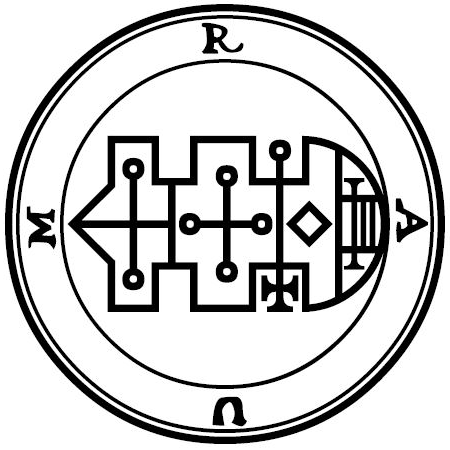
Raum steals, destroys cities, and ruins reputations—a predatory spirit who strips away what defines security and status.
Raum manifests as a lean figure wreathed in shifting shadow and rust-colored flame, features obscured by constant motion. The demon arrives with the scent of burnt offerings and the sound of distant wailing—the acoustics of places recently destroyed. Summoners report experiencing sudden predatory clarity regarding vulnerabilities in targets, as if trained by centuries of plunder and siege.
The presence radiates controlled viciousness and patient cunning. Raum's aura is deceptively calm—the demon projects a strange gentleness while the sensitive perceive the barely-restrained energy of a predator moments before striking. There is no malice here, merely the amoral hunger of fire consuming everything in its path.
Raum identifies and enables acquisition of valuable items or secrets, stripping away protective measures through cunning rather than force. The demon reveals exactly what is needed to bypass security—not through brute magical power but through understanding human nature and exploitable gaps in defenses.
The demon understands how cities collapse—which supports are critical, which systems cascade upon failure, how to create maximum disruption through precisely targeted action. Summoners gain insight into social infrastructure vulnerabilities and can engineer urban decline or catastrophic collapse.
Raum specializes in identifying the secret that unmakes a person. The demon can expose shameful truths, manufacture convincing scandals, or orchestrate social circumstances that destroy the target's standing. Once reputation falls, the demon ensures the decline accelerates.
From Plague-Spirit to Urban Destroyer-Demon
Raum's historical identity reveals a complex fusion of plague-spirit traditions, siege-warfare demons, and predatory djinn mythology. The demon's name possibly derives from Aramaic 'rawm' (height/ascent) or Hebrew 'raum' (to steal/abduct). Arabic tradition associated 'Raum' with the red demon—harbinger of plague, destroyer of cities, who fed on human suffering and social collapse.
Pre-Islamic Arabic sources depict Raum as belonging to a class of spirits that thrived in destruction's aftermath. Unlike demons of warfare (who served military functions), Raum was purely parasitic—appearing where cities had fallen, feeding on social dissolution. Medieval grimoires preserved this tradition while recontextualizing Raum as summoner-accessible predatory force.
The Destroyer-Demon Across Traditions
Raum appears with consistent characterization across grimoire traditions—a dangerous deviation from typical demon variation patterns. This consistency suggests deep historical standardization or particularly vivid historical experiences with the spirit.
Raum in Siege, Theft, and Urban Destruction
Historical and modern approaches to working with Raum.
Regardless of method, the irreducible correspondences remain: the seal is central, the element is Air, the planet is Mars, the metal is iron, and the day is Tuesday. These form the signal beneath the noise of varying approaches.
Raum responds eagerly to those pursuing profit through theft or destruction, though the demon operates with infuriating independence. Manifestations occur unpredictably—sometimes within minutes, sometimes after weeks. The spirit seems to decide independently whether summoner's goals deserve assistance.