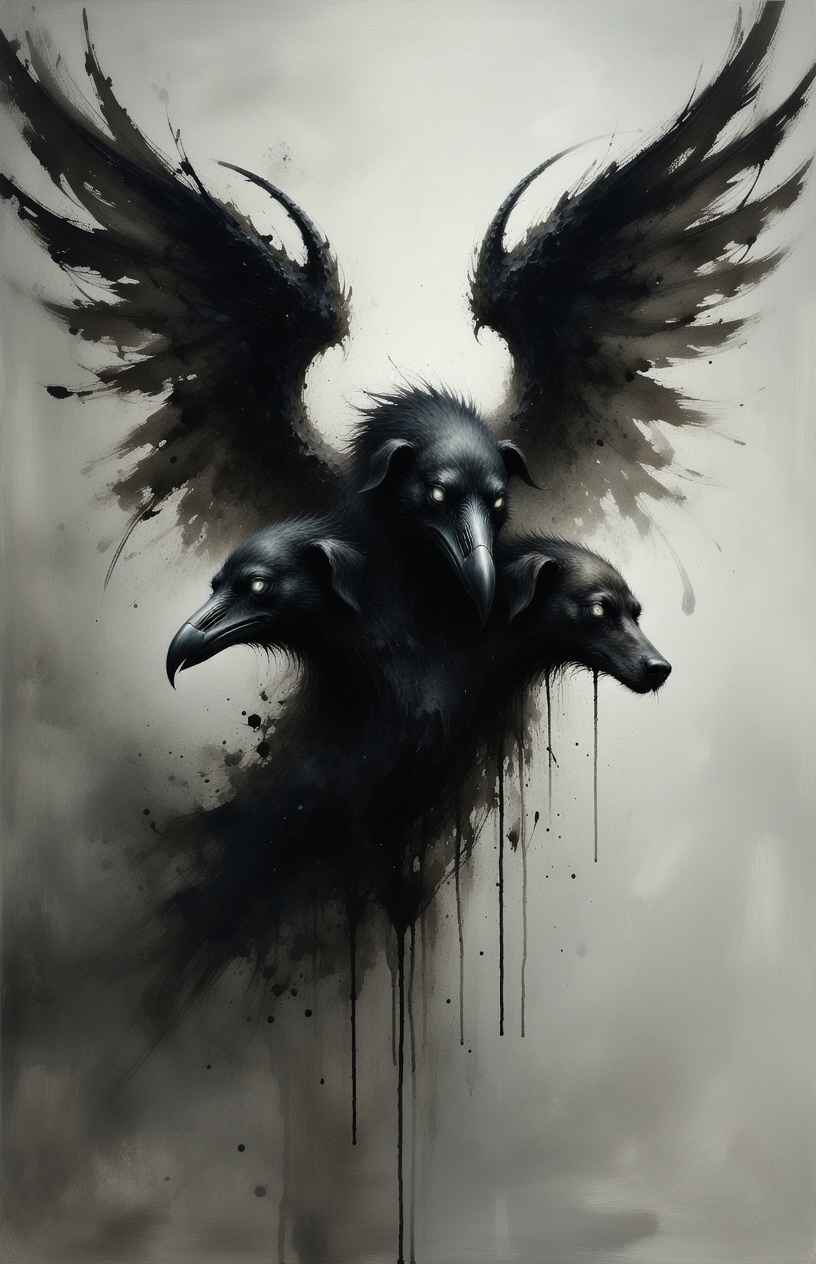
A marquis of earth whose dominion encompasses the arts, sciences, and the power of eloquent speech, capable of restoring lost knowledge and damaged reputation.
Naberius manifests as a figure of refined bearing and intellectual elegance, appearing sometimes as a scholar or magister, sometimes as a being whose form seems composed of language itself—words and letters forming and reforming. The demon's presence brings the smell of parchment and ink, the scent of libraries and scriptorium, and the subtle vibration of eloquent speech. Those in Naberius' presence experience a sudden amplification of linguistic capability.
The demon's aura radiates eloquence and the power of well-chosen words. Unlike Ipos' aggressive wit, Naberius carries the sense of knowledge refined through study and practice, of language as tool for understanding and communication. Being in Naberius' presence is like standing in a great academy where all forms of knowledge are honored.
Naberius grants complete mastery of language—the ability to speak perfectly in any context, to persuade through sheer eloquence, to find exactly the right words for any situation. This power extends beyond mere rhetoric to genuine communication of complex ideas.
The demon can restore lost knowledge and forgotten disciplines, enabling the recovery of texts and teachings believed destroyed. Naberius also restores damaged reputations through eloquent defense and articulate presentation of truth.
Naberius grants comprehensive understanding and practical mastery of all the liberal arts—grammar, rhetoric, logic, music, arithmetic, geometry, astronomy. This knowledge extends to teaching others and transmitting mastery through education.
The emergence of Naberius within the Western grimoire tradition.
Naberius appears in the major European grimoire compilations of the sixteenth and seventeenth centuries, cataloged as the Marquis of the Goetia's infernal hierarchy. The spirit commands 20 legions and holds dominion over matters of teaches sciences and restores lost dignities.
The name Naberius does not appear in pre-medieval sources with certainty, suggesting this spirit may represent a later codification of older folk beliefs about elemental air spirits, planetary moon intelligences, or localized spirits of place that were systematized during the great period of grimoire compilation.
What is certain is that by the time Johann Weyer published the Pseudomonarchia Daemonum in 1577, Naberius had been assigned a fixed position in the hierarchy, specific powers, and a defined method of conjuration — details that would be refined but largely preserved in the later Ars Goetia.
How different sources describe Naberius across centuries of compilation.
Naberius in art, literature, and the modern imagination.
Historical and modern approaches to working with Naberius.
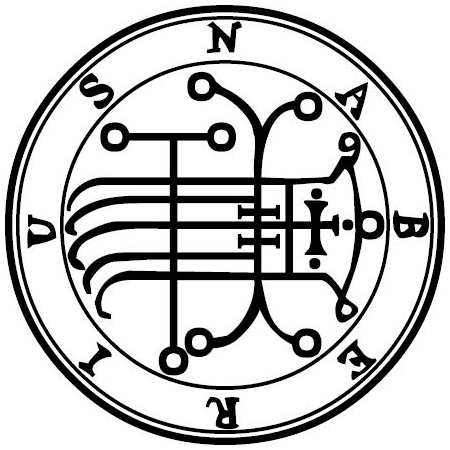
Regardless of method, the irreducible correspondences remain: the seal is central, the element is Air, the planet is Moon, the metal is silver, and the day is Monday. These form the signal beneath the noise of varying approaches.
Naberius responds readily to students, scholars, teachers, and those seeking to restore what was lost, particularly when the invocation emphasizes genuine education and understanding.