President and Prince commanding 66 legions, master of past and future knowledge, transport and teleportation, and the ignorance that shields mortals.
Gaap manifests as a figure of shifting presence—sometimes appearing as a traveler in dusty robes, sometimes as a celestial map given form. His eyes seem to look through distances and times simultaneously. Paths appear and disappear around him; destinations become uncertain yet somehow inevitable. His form suggests boundless movement and the knowledge that all places are simultaneously near and far. The air around him carries the scent of distant lands and the quality of journeys both physical and metaphysical.
Gaap's presence evokes both wanderlust and profound security—the feeling that all destinations are ultimately reachable, all times accessible. Those near him sense the vast web of connection across space and time, yet also experience clarity about what they need not know. His aura suggests both the freedom of travel and the wisdom of chosen ignorance.
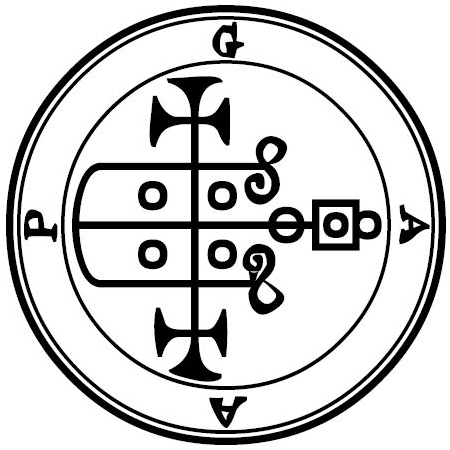
Enables rapid travel to any desired destination—metaphorically or literally. Gaap removes obstacles and shortens paths. Journeys undertaken with his favor arrive successfully and swiftly, whether across physical distance or through spiritual realms.
Shows past events and future probabilities. Gaap reveals the threads connecting what was to what will be. Visions are clear and undeniable, though sometimes cryptic in interpretation.
Teaches which knowledge to avoid and which mysteries to leave unexamined. Gaap grants the wisdom to know that some things are better unknown, protecting the practitioner from dangerous or soul-damaging information.
The emergence of Gaap within the Western grimoire tradition.
Gaap appears in the major European grimoire compilations of the sixteenth and seventeenth centuries, cataloged as the President and Prince of the Goetia's infernal hierarchy. The spirit commands 36 legions and holds dominion over matters of teaches sciences and grants passage.
The name Gaap does not appear in pre-medieval sources with certainty, suggesting this spirit may represent a later codification of older folk beliefs about elemental air spirits, planetary mercury intelligences, or localized spirits of place that were systematized during the great period of grimoire compilation.
What is certain is that by the time Johann Weyer published the Pseudomonarchia Daemonum in 1577, Gaap had been assigned a fixed position in the hierarchy, specific powers, and a defined method of conjuration — details that would be refined but largely preserved in the later Ars Goetia.
How different sources describe Gaap across centuries of compilation.
Gaap in art, literature, and the modern imagination.
Historical and modern approaches to working with Gaap.
Regardless of method, the irreducible correspondences remain: the seal is central, the element is Air, the planet is Mercury, the metal is mercury, and the day is Wednesday. These form the signal beneath the noise of varying approaches.
Gaap responds to those calling with genuine need for travel or knowledge of times beyond immediate reach. He favors travelers, merchants, scholars, and those making major transitions. He appears most readily during twilight hours or when the boundary between places is thin. His responses often manifest through unexpected opportunities or sudden clarity about journeys.