No. 71 — Duke

Dantalion

Master of all arts and sciences, granting knowledge and power to read and alter thoughts of others.

Dantalion — manifestation

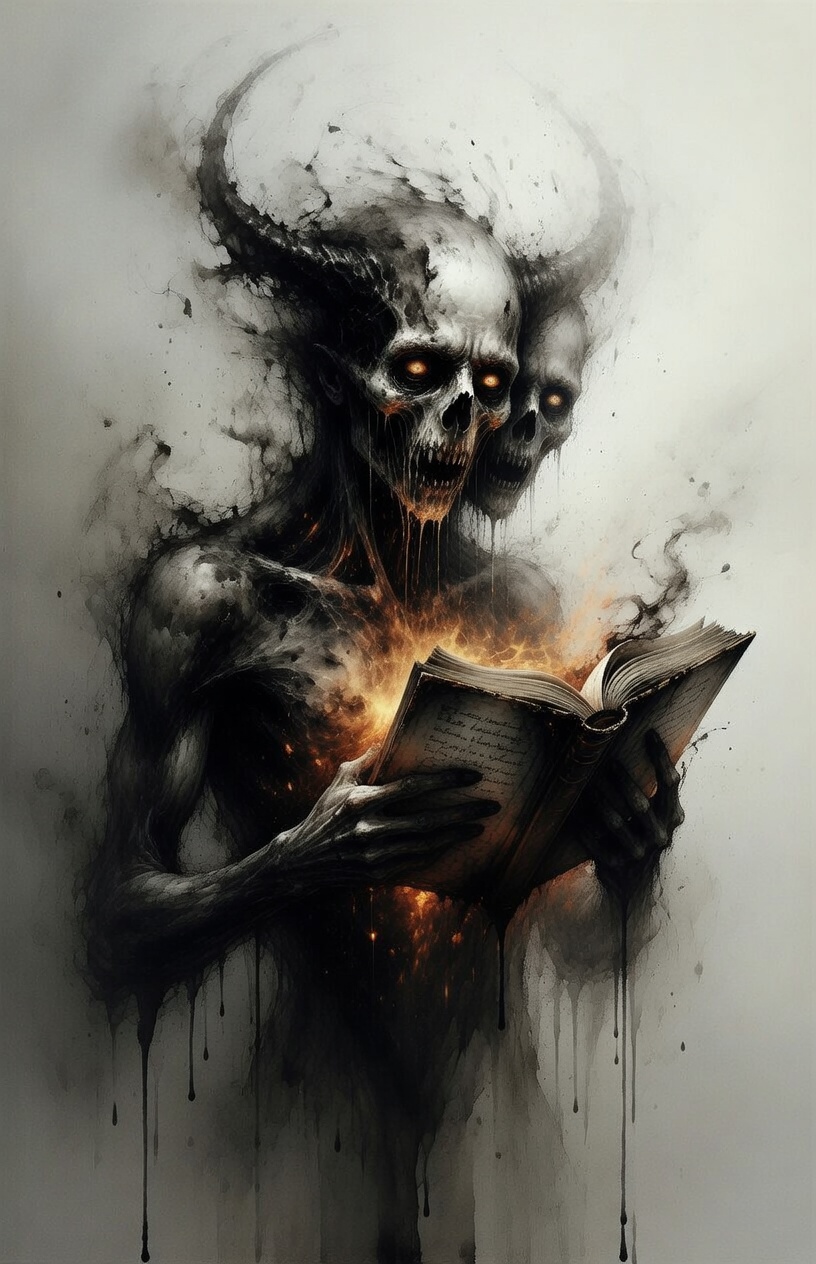
Dantalion manifests as luminous knowledge surrounded by scrolls and books. Multiple faces each showing different expression. Voice sounds like infinite whispered conversations.

His aura radiates supreme knowledge. Thoughts become visible, emotions perceivable, consciousness transparent to observation and manipulation.

Powers
Universal Mastery
Knowledge of all arts, sciences, crafts and disciplines.
Mind Reading
Perceives thoughts, emotions and intentions with accuracy.
Thought Manipulation
Changes thoughts and feelings of others through supernatural means.
Love and Attraction
Specializes in inspiring love, desire and attraction.
Rank
Duke
Legions
36
Sphere
Venus
Element
Water
West / Dusk
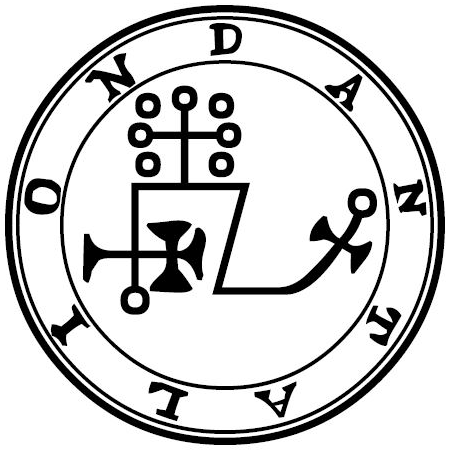
Seal
See Grimoire
Notation Below
Seal of Dantalion
Powers & Dominion 3 recorded abilities
01 Scientia Universalis

Complete knowledge of all disciplines and teaching ability.

knowledge mastery teaching
02 Cogitationes Lectura

Reading all thoughts, emotions and intentions of others.

mind-reading perception knowledge
03 Mentem Mutatio

Changing thoughts and beliefs in others. Mental domination potential.

influence manipulation control
Deep Lore
I.

Historical Origins

The emergence of Dantalion within the Western grimoire tradition.

Dantalion represents a distinct category within the Goetia: a spirit whose dominion encompasses the full spectrum of human knowledge and, more provocatively, the power to penetrate and alter the thoughts of others. His position as the 71st spirit places him among the final and most specialized demons in the Lesser Key, suggesting he emerged later in the grimoire tradition's evolution. Unlike demons granted dominion over material phenomena or elemental forces, Dantalion's power is fundamentally psychological and intellectual—he grants mastery over thought itself, making him one of the most ethically complex spirits in the catalog.

The iconography of Dantalion—appearing as a man bearing all the faces of humanity, both male and female—encodes his essential nature. He is the witness to all minds, the keeper of all perspectives, and the arbiter of intellectual ambition. His right hand carries a great book, the repository of all sciences and arts, suggesting that knowledge and the capacity to manipulate consciousness are inseparable in his domain. This duality reflects a medieval anxiety about learning itself: the pursuit of knowledge is intertwined with the temptation to use that knowledge to dominate others.

Dantalion's integration into Western grimoires appears to be influenced by Renaissance Neoplatonic thought, which emphasized the correspondence between universal principles and individual minds. His association with Venus, copper, and Friday suggests an erotic dimension to his power—the knowledge he grants includes understanding human desire itself, and the capacity to reshape attraction and emotional attachment in others.

c. 1500s–1550s
Early Grimoire Appearances
Dantalion first appears in grimoires contemporaneous with the Renaissance occult revival, likely influenced by Marsilio Ficino's theories of celestial correspondence and magical psychology.
1577
Pseudomonarchia Daemonum
Weyer catalogs Dantalion as a Duke commanding thirty-six legions, emphasizing his role as a teacher of arts and sciences and a revealer of secret thoughts hidden in the minds of men.
c. 1600s
Ars Goetia
The Goetia solidifies Dantalion's position with detailed description of his appearance and his capacity to teach all arts and sciences. His dual power—to reveal thought and to alter desire—becomes explicitly stated in the conjuration formulas.
1818–1863
Dictionnaire Infernal
De Plancy emphasizes Dantalion's role as a corruptor of the intellectual and emotional faculties, placing him among spirits whose power extends into the modern age of rationalism and psychological manipulation.
II.

Grimoire Variations

How different sources describe Dantalion across centuries of compilation.

Ars Goetia
Lesser Key of Solomon · c. 1600s
Dantalion appears as a man bearing the faces of all people, both male and female, holding a great book in his right hand. He teaches all arts and sciences to any who summon him and is capable of revealing the secret thoughts of others and changing their wills and desires through magical influence.
The Goetia presents Dantalion as uniquely gifted in both intellectual transmission and psychological manipulation—a dangerous combination requiring cautious handling.
Pseudomonarchia Daemonum
Johann Weyer · 1577
Weyer emphasizes Dantalion's office as teacher of the liberal arts and sciences, and his peculiar power to know and disclose the thoughts of any person. He is bound by proper conjuration and binding sigils, but his knowledge is vast and his compliance, once secured, comprehensive.
Weyer's account stresses the pedagogical rather than manipulative aspects, presenting Dantalion as a source of learning for those bold enough to summon him.
Dictionnaire Infernal
Collin de Plancy · 1818 / 1863
De Plancy describes Dantalion as a demon of temptation toward intellectual pride and psychological domination. His book contains not only sciences but the secrets of compelling others to love or obedience through knowledge of their hidden thoughts and desires.
The 19th-century framing emphasizes the ethical peril inherent in Dantalion's gifts, treating knowledge as a vector for corruption and control.
III.

Cultural Legacy

Dantalion in art, literature, and the modern imagination.

Grimoire Tradition
The Master of All Knowledge
Dantalion embodies the complete curriculum of medieval and Renaissance learning—from natural philosophy to the occult arts—compressed into a single demonic intelligence. His correspondences to Venus, copper, and Friday align him with desire and attraction, suggesting that knowledge itself can be weaponized as seduction and that understanding others' thoughts is the ultimate form of intimacy or dominion.
MINDS
BOOKS
Modern Practice
Psychology and Persuasion Incarnate
Contemporary practitioners invoke Dantalion for mastery of academic disciplines, artistic inspiration, and psychological insight. His power to reveal hidden thoughts makes him a figure of fascination for those seeking to understand others or to influence opinion—though responsible practitioners acknowledge the ethical complexity of such work.
Games & Media
The Demon of Forbidden Erudition
In contemporary fantasy and gaming, Dantalion appears as the archetype of the knowledge-granting demon, often portrayed as seductive, complex, and morally compromised. His appearance across multiple faces resonates with modern themes of multiplicity, identity, and psychological fragmentation.
THOUGHT
IV.

Ritual Traditions

Historical and modern approaches to working with Dantalion.

01
Solomonic Ceremonial
The conjurer must inscribe Dantalion's sigil on copper or parchment with copper ink, working on a Friday when Venus holds sway. The invocation should specify precisely which knowledge is sought or which mind's thoughts are to be revealed, for Dantalion responds to clarity of purpose.
02
Grimoire Purist
The Ars Goetia protocol requires binding Dantalion with his sigil and the names of his governing princes. The conjurer must offer tokens of intellectual pursuit—inscribed papers, scented inks, or tokens of study—and must bind him explicitly to truthfulness in all revelations and teachings.
03
Psychological Model
Practitioners working archetypal frameworks view Dantalion as the embodiment of intellectual curiosity and psychological penetration. Meditation on his many faces becomes a practice of understanding perspective-shifting and the multiplicity of human consciousness.
04
Modern Devotional
Some practitioners establish ongoing relationship with Dantalion through regular offerings of writing, study, and the documentation of insights gained. This approach treats him as a muse-like figure, a source of intellectual breakthrough and expanded perspective.

Regardless of method, the irreducible correspondences remain: the seal is central, the element is water, the planet is Venus, the metal is copper, and the day is Friday. These form the signal beneath the noise of varying approaches.

Classification
RankDuke — sovereign authority
Legions36 — spirits under direct command
PlanetVenus — ♀
MetalCopper — Cu
ElementWater
SummoningFriday
SealRequired — inscribed on lamen or parchment
Invocation
Dantalion, lord of every art and science,
Open minds to thy transcendent alliance,
Teach us all that mortal minds can know,
And let our will through others' thought flow.

Responds to genuine knowledge desire. Dislikes superficiality. Response within lunar cycle.

← Previous
Seere
No. 70 — Prince
Explore
Lore
History & Origins
Next →
Andromalius
No. 72 — Earl