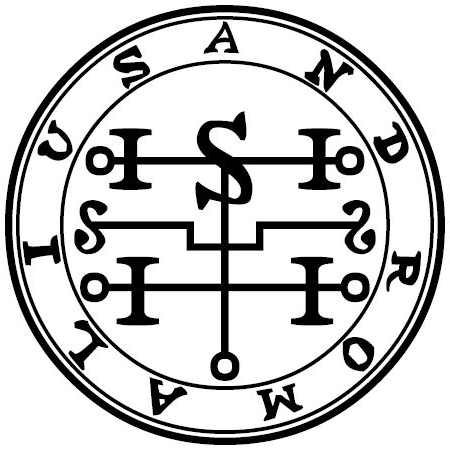
Finder of thieves and stolen goods, punisher of wickedness, defending justice through righteous force and karmic balance.
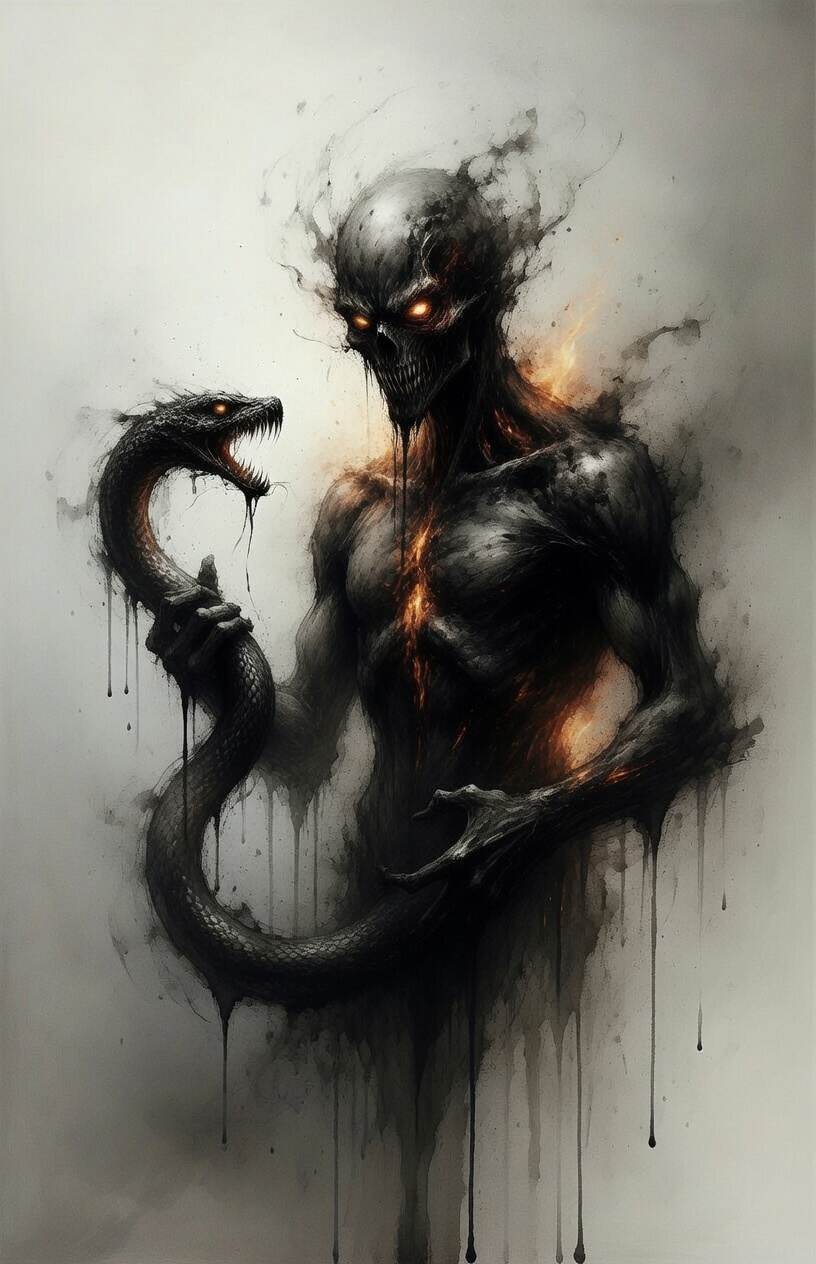
Andromalius manifests as warrior bearing scales of justice and sword of judgment. Surrounded by aura of stern authority. Air charged with intention to right wrongs.
His aura radiates righteous fury and absolute justice. Hidden dishonesty becomes visible, stolen goods call out location, lies stand exposed.
Finding thieves and theft perpetrators with perfect accuracy.
Recovery of stolen goods through supernatural means.
Punishment of wickedness making evil return upon wrongdoer.
The emergence of Andromalius within the Western grimoire tradition.
Andromalius holds a unique and extraordinary position within the Goetia as the 72nd and final spirit in the Lesser Key of Solomon. His placement as the closing demon of the catalog suggests intentional symbolic design—he stands as the ultimate guardian and punisher, the last word in a grimoire devoted to negotiating with forces antithetical to divine order. His name, possibly derived from Greek origins meaning "man-warrior," encodes his essential function: he is the martial enforcer of cosmic justice, the spirit who pursues and subdues those who have transgressed moral and legal boundaries.
Unlike demons of desire, knowledge, or elemental dominion, Andromalius serves a fundamentally restorative purpose. He finds and restores stolen goods, exposes thieves and liars, and punishes wickedness with righteous violence. His association with Mars, iron, and Tuesday grounds him in the martial and assertive principle—not aggression for its own sake, but the focused force of justice itself. The serpent he carries is traditionally interpreted as a symbol of vengeance and healing, linking him to the ancient caduceus and its association with correction and balance.
His integration into the Solomonic grimoires reflects an ancient principle: that justice itself must have a supernatural enforcer. Where human law fails or is corrupted, Andromalius intervenes. He appears in medieval and early modern contexts as the demon-spirit called upon by those wronged, by judges seeking to uncover hidden crimes, and by those committed to defending the innocent from predation and theft. This makes him among the few spirits in the grimoire catalog explicitly invoked for defense rather than acquisition.
How different sources describe Andromalius across centuries of compilation.
Andromalius in art, literature, and the modern imagination.
Historical and modern approaches to working with Andromalius.
Regardless of method, the irreducible correspondences remain: the seal is central, the element is earth, the planet is Mars, the metal is iron, and the day is Tuesday. These form the signal beneath the noise of varying approaches.
Responds passionately to genuine injustice. Dislikes vindictiveness. Response within three days.