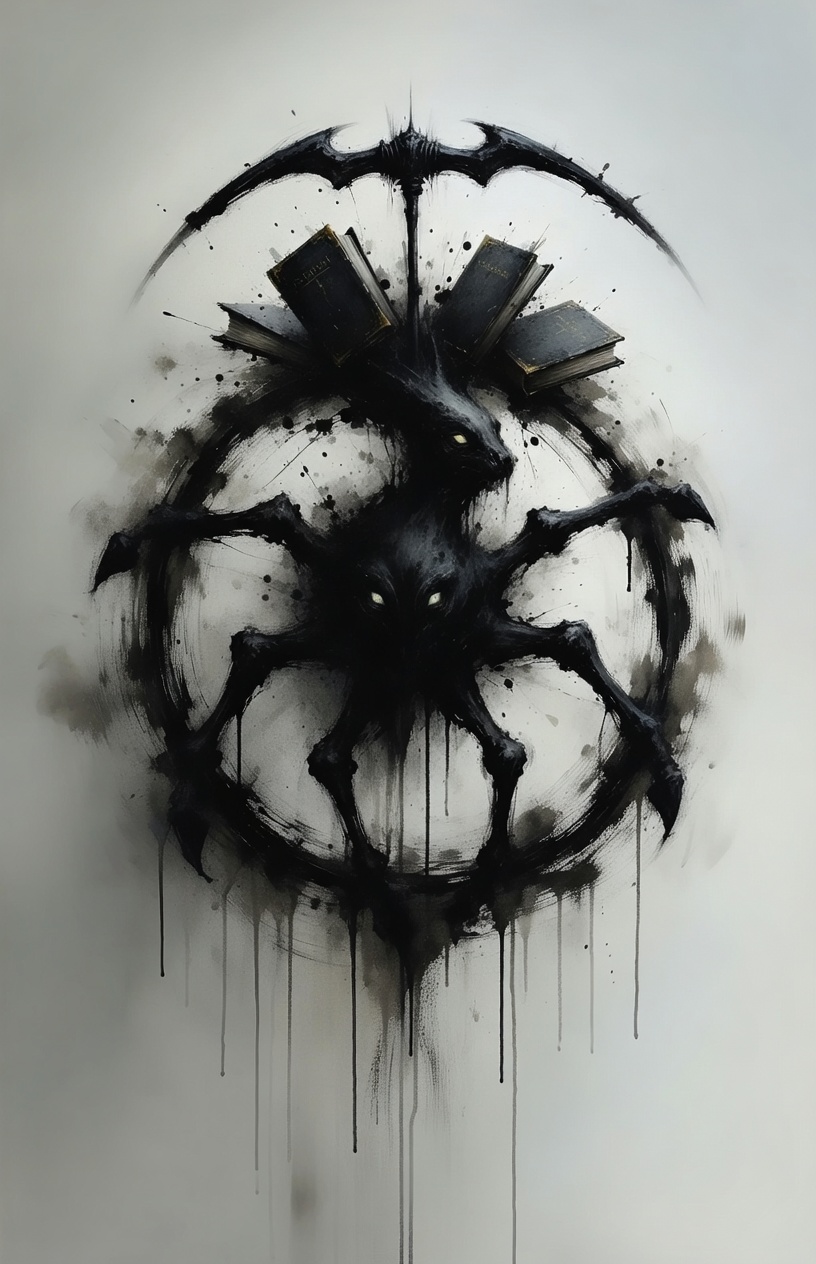
Master of philosophy and healing, granting knowledge of medicine and natural secrets while elevating consciousness toward wisdom.
Buer manifests as a figure of healing gentleness combined with philosophical depth, often appearing as a centaur or as a wise figure surrounded by healing plants. His presence arrives with the scent of herbs and healing chambers—comforting yet charged with subtle knowledge. When invoked, those nearby experience unusual mental clarity and compassion; confusion dissolves and the causes of suffering become apparent. There exists a quality of understanding that soothes even as it illuminates.
His aura radiates with the cool clarity of intellect combined with the warm acceptance of compassion. There exists a philosophical depth about his presence—the bearing of one who has pondered existence and arrived at deep understanding. The space around him becomes contemplative; agitation stills and the mind becomes naturally drawn toward introspection and wisdom-seeking.
Buer grants comprehensive knowledge of medicine, pharmacology, and healing practices. The practitioner understands not merely which substances cure which conditions but the principles underlying healing itself. Knowledge of the medicinal properties of plants becomes intuitive; the practitioner can identify useful herbs and understand their applications with supernatural accuracy. This power extends to understanding the spiritual and emotional dimensions of physical illness.
The spirit confers genuine wisdom regarding existence, suffering, and liberation. Through Buer's teaching, the practitioner comes to understand the deep causes of suffering and the paths toward its mitigation. This is not abstract philosophy but lived understanding that fundamentally alters how one perceives and engages with reality. Practitioners report that work with Buer gradually elevates consciousness toward wisdom.
Buer grants the rare power to teach complex subjects with both clarity and profound compassion. The practitioner becomes able to perceive the specific confusions and barriers preventing understanding in others and to address those barriers directly. Teaching becomes a form of healing; students don't merely learn but experience transformation through the encounter with clear wisdom delivered with genuine care.
The emergence of Buer within the Western grimoire tradition.
Buer appears in the major European grimoire compilations of the sixteenth and seventeenth centuries, cataloged as the President of the Goetia's infernal hierarchy. The spirit commands 15 legions and holds dominion over matters of heals all manner of diseases.
The name Buer does not appear in pre-medieval sources with certainty, suggesting this spirit may represent a later codification of older folk beliefs about elemental water spirits, planetary mercury intelligences, or localized spirits of place that were systematized during the great period of grimoire compilation.
What is certain is that by the time Johann Weyer published the Pseudomonarchia Daemonum in 1577, Buer had been assigned a fixed position in the hierarchy, specific powers, and a defined method of conjuration — details that would be refined but largely preserved in the later Ars Goetia.
How different sources describe Buer across centuries of compilation.
Buer in art, literature, and the modern imagination.
Historical and modern approaches to working with Buer.
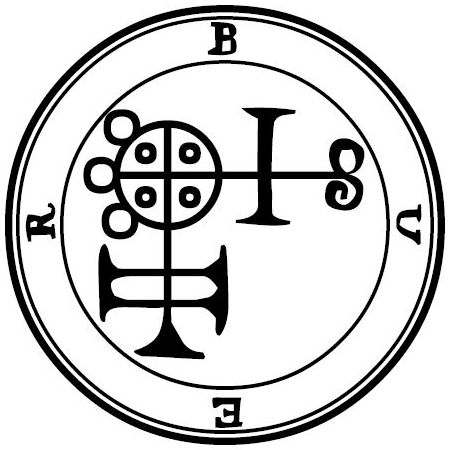
Regardless of method, the irreducible correspondences remain: the seal is central, the element is Water, the planet is Mercury, the metal is mercury, and the day is Wednesday. These form the signal beneath the noise of varying approaches.
Buer responds most readily to those genuinely seeking wisdom and healing rather than power or mere curiosity. He favors practitioners approaching with humility and willingness to be transformed by encounter with truth.