Lord of worldly dominion and dignities—the most famous and dangerous of demons, granting power with inevitable cost.
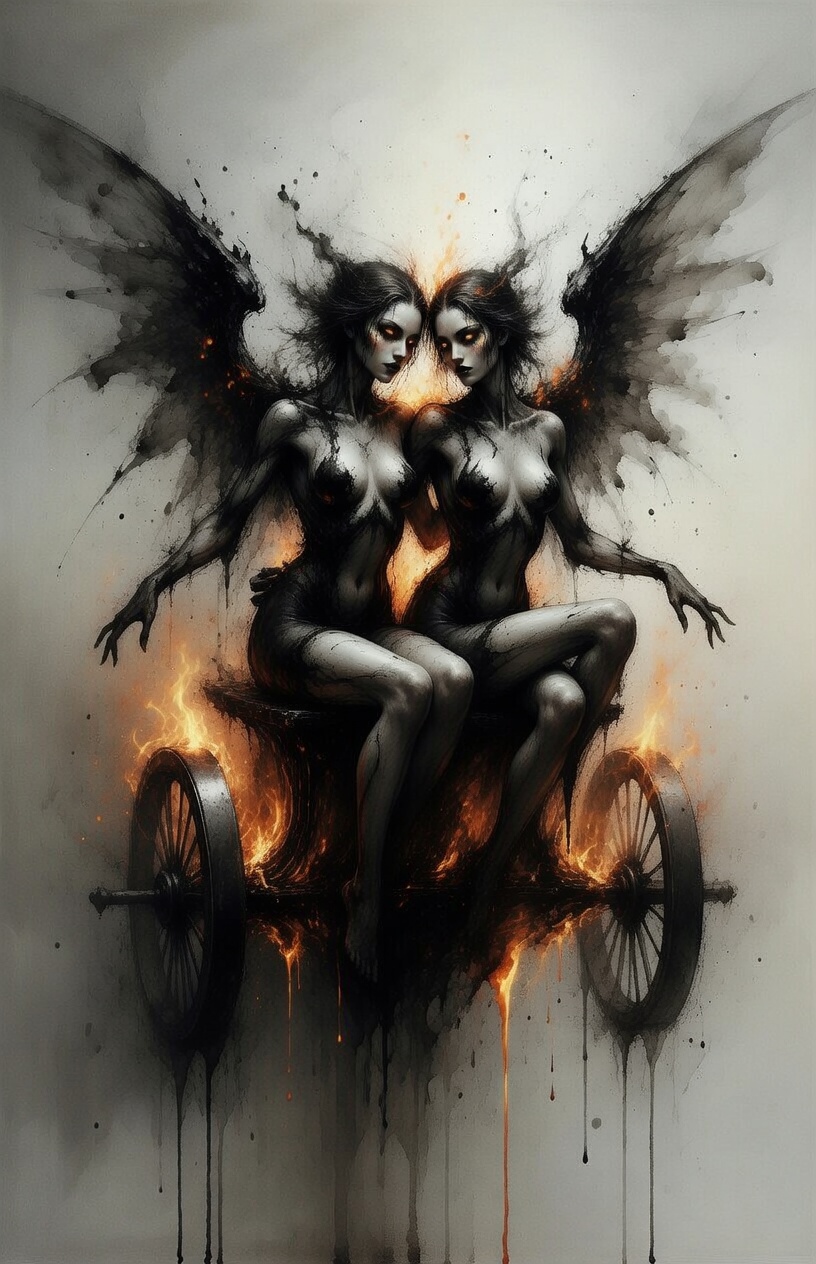
Belial manifests as figure of terrible beauty. Handsome prince in golden robes or burning throne. Presence commands absolute attention. Air fills with precious spices and sulfur.
His aura radiates pure charisma and absolute power. Simultaneously exalting and diminishing. Embodies every attractive principle. Presence is intoxicating and profoundly dangerous.
Direct elevation of worldly status and power. Doors open, obstacles remove themselves.
Manipulation of supernatural forces. Makes miracles happen.
Extraordinarily powerful familiars directly manifesting Belial's essence.
The emergence of Belial within the Western grimoire tradition.
Belial's etymology—derived from the Hebrew beli ya'al (without worth)—establishes him as a figure of primordial opposition in Judeo-Christian cosmology. Pre-dating the medieval grimoires by centuries, Belial appears in the Dead Sea Scrolls and the Community Rule, where he commands the Sons of Darkness in cosmic warfare. This ancient pedigree infuses the later grimoire tradition with apocalyptic weight: Belial is not merely a demon conjured for worldly gain, but an avatar of fundamental corruption and the entropy that threatens divine order.
The Pauline epistles cement his position in Christian demonology when 2 Corinthians 6:15 poses the rhetorical question of what fellowship can exist between righteousness and Belial. Medieval theologians seized upon this passage to construct elaborate hierarchies of evil, placing Belial among the highest-ranking demonic powers. By the late medieval period, his reputation as a lord of deception and temporal dominion had crystallized in grimoire circles—a demon who offers kingship and wealth precisely because he embodies the corruption inherent in worldly power itself.
His elevation to the rank of King in later grimoires reflects the gravity with which practitioners regarded him. Unlike demons associated with peripheral arts or minor compulsions, Belial commands fifty legions and grants dominion over the material world's deepest desires: reputation, wealth, authority, and carnal pleasure. This makes him simultaneously the most desirable and most dangerous of the Goetia's spirits—practitioners who sought his aid often found themselves bound by consequences far exceeding their initial bargains.
How different sources describe Belial across centuries of compilation.
Belial in art, literature, and the modern imagination.
Historical and modern approaches to working with Belial.
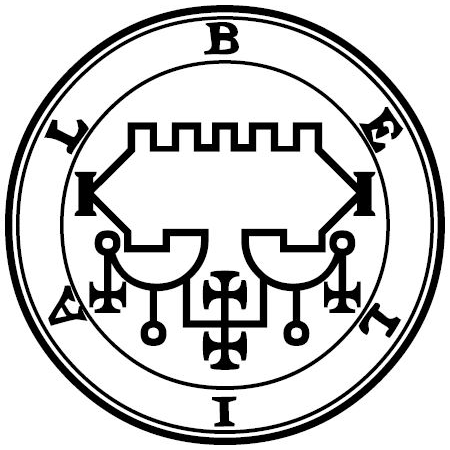
Regardless of method, the irreducible correspondences remain: the seal is central, the element is fire, the planet is the Sun, the metal is gold, and the day is Sunday. These form the signal beneath the noise of varying approaches.
EXTREME CAUTION: Belial grants exactly what requested then destroys through hidden costs. Historical records document countless ruined conjurors. Nearly immediate response with inevitable price.