No. 67 — Duke

Amdusias

Master of music and nature, commanding instruments and animals, granting harmony and acoustic mastery.

Amdusias — manifestation

Amdusias manifests as musical notes flowing like liquid light around humanoid form. Surrounded by self-playing instruments. Animals emerge from his being.

His aura resonates with harmonic frequencies. Music underlies all natural sounds. Reality appears as vast symphony with infinite instruments.

Powers
Music Mastery
Command over all musical instruments and composition.
Animal Command
Authority over all creatures.
Tree Binding
Commands authority over trees and plants.
Familiar Manifestation
Creates spiritual familiars from animals.
Rank
Duke
Legions
30
Sphere
Venus
Element
Air
East / Dawn
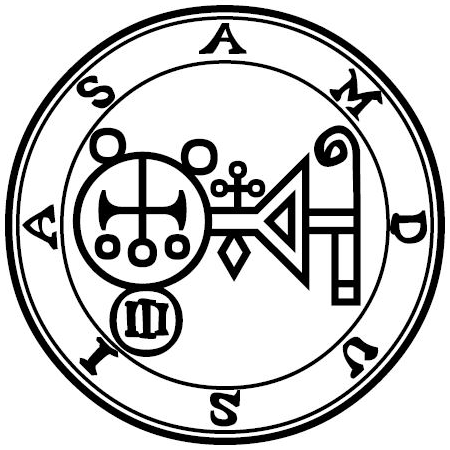
Seal
See Grimoire
Notation Below
Seal of Amdusias
Powers & Dominion 3 recorded abilities
01 Musica Perfecta

Complete mastery of musical expression and composition.

music harmony art
02 Bestiarum Dominatio

Authority over all animals and their obedience.

animals command nature
03 Arboris Flexio

Power over trees and vegetation for protection.

nature growth control
Deep Lore
I.

Historical Origins

The emergence of Amdusias within the Western grimoire tradition.

Amdusias occupies a distinctive niche within the Goetia as a spirit of harmony, music, and the mastery of natural forces. The 67th demon in the Lesser Key of Solomon, he appears to represent older traditions of nature-spirits absorbed into the Christian grimoire framework. His name may derive from Greek or Middle Eastern sources, encoding associations with wind, sound, and the animating principle that moves through creation. Unlike demons bound primarily to corruption or ambition, Amdusias presides over domains of beauty, order, and cosmic resonance.

The figure of Amdusias—appearing as a unicorn or as a man possessing animalistic claws—suggests a liminal status between human civilization and wild nature. His power to command all musical instruments to play without visible musicians implies a deep understanding of sympathetic vibration and invisible forces. Medieval practitioners recognized in him the principle of musica universalis, the harmony of the spheres that Renaissance theorists posited as underlying all creation. His connection to making trees bend at will further establishes him as a master of natural laws and the hidden elasticity within apparent rigidity.

Amdusias's integration into the grimoires reflects a significant evolution in magical thinking: the recognition that control over nature extends beyond the merely destructive or acquisitive. He represents the possibility of harmony with natural forces, the power to conduct invisible energies, and the capacity to manifest order within apparent chaos. His association with Venus and Friday suggests that his dominion includes the attraction and coordination of forces, the binding of disparate elements into unified expression.

c. 1500s
Early Grimoire Appearances
Amdusias appears in early grimoires as a spirit of natural mastery and music, possibly influenced by medieval understandings of nature-spirits and the theory of universal harmony that animated Renaissance natural philosophy.
1577
Pseudomonarchia Daemonum
Weyer catalogs Amdusias as a Duke commanding thirty legions, emphasizing his power over music and his capacity to make all instruments play without human touch. He notes Amdusias's role in teaching musical composition and theory.
c. 1600s
Ars Goetia
The Goetia solidifies Amdusias's position with vivid descriptions of his appearance and his mastery over all instruments and voices. His role as a teacher of music and his power to command the natural world become explicit in the conjuration formulas.
1818–1863
Dictionnaire Infernal
De Plancy emphasizes Amdusias's role as a spirit of hidden harmonies and natural persuasion. He becomes associated with the principle that music and sound are fundamental forces of creation, capable of reshaping material reality.
II.

Grimoire Variations

How different sources describe Amdusias across centuries of compilation.

Ars Goetia
Lesser Key of Solomon · c. 1600s
Amdusias appears first as a unicorn, then assuming human form with bestial claws visible. He commands all musical instruments to produce music without players, teaches all music and artistic composition, and bends trees and branches at his will. He governs thirty legions and responds to proper invocation with immediate obedience.
The Goetia emphasizes Amdusias's dual nature—wild and refined—and his unique capacity to animate matter through harmonic resonance.
Pseudomonarchia Daemonum
Johann Weyer · 1577
Weyer describes Amdusias as a Duke whose knowledge encompasses all music and instruments. He is capable of making great sounds and voices resound without physical cause and teaches the theory and practice of musical composition to those who summon him with proper respect and bound by oath.
Weyer's account emphasizes Amdusias's pedagogical generosity and his alignment with legitimate artistic pursuit rather than mere deception through phantom sounds.
Dictionnaire Infernal
Collin de Plancy · 1818 / 1863
De Plancy portrays Amdusias as a spirit of hidden concordances and natural influence. He represents the power of sound and vibration to move matter and redirect will, making him dangerous in the hands of those who would use music as psychological manipulation or occult domination.
The 19th-century compilation emphasizes the potentially corrupting applications of Amdusias's gifts, framing music itself as a dangerous force requiring ethical restraint.
III.

Cultural Legacy

Amdusias in art, literature, and the modern imagination.

Grimoire Tradition
The Master of Hidden Harmonies
Amdusias embodies the principle of sympathetic resonance—the understanding that sound, vibration, and harmony are fundamental forces capable of reshaping reality. His correspondences to Venus, copper, and Friday align him with attraction and coordination, suggesting that his mastery extends beyond mere instruments to the orchestration of natural and human relationships through harmonic principle.
SOUND
SONG
Modern Practice
The Conductor of Invisible Forces
Contemporary practitioners invoke Amdusias for musical inspiration, artistic breakthrough, and the cultivation of natural harmony in their surroundings. His power to move and coordinate natural forces appeals to those seeking ecological attunement and the capacity to work with rather than against environmental patterns. Some treat him as a muse of composition and performance.
Games & Media
The Demon of Mysterious Melodies
In fantasy and gaming, Amdusias appears as the archetype of the artistic demon—less overtly dangerous than many of his peers, yet still possessing profound and unsettling power. His capacity to produce music without visible source resonates with themes of hidden influence and the uncanny power of art to move the soul.
WIND
IV.

Ritual Traditions

Historical and modern approaches to working with Amdusias.

01
Solomonic Ceremonial
The conjurer must inscribe Amdusias's sigil on copper parchment or in copper ink, ideally working on a Friday when Venus holds dominion. Music should accompany the invocation—the burning of fragrant resins with melodic accompaniment creates sympathetic resonance with Amdusias's domain.
02
Grimoire Purist
The Ars Goetia protocol requires calling Amdusias by his sigil and binding him with the names of his thirty legions. The conjurer must state clearly whether seeking instruction in music and composition or the command of natural forces. An offering of musical performance—singing or instrumental play—demonstrates respect and establishes energetic resonance.
03
Psychological Model
Practitioners working archetypal frameworks view Amdusias as the embodiment of creative flow and the principle of harmony. Meditation on his dual nature—unicorn and human, wild and refined—becomes a practice of integrating contradictory impulses into unified expression.
04
Modern Devotional
Some practitioners maintain relationship with Amdusias through regular musical practice and offerings of creative work. This approach treats him as a collaborator in artistic endeavor, a spirit who enhances inspiration and deepens the capacity to work with natural and harmonic principles.

Regardless of method, the irreducible correspondences remain: the seal is central, the element is air, the planet is Venus, the metal is copper, and the day is Friday. These form the signal beneath the noise of varying approaches.

Classification
RankDuke — sovereign authority
Legions30 — spirits under direct command
PlanetVenus — ♀
MetalCopper — Cu
ElementAir
SummoningFriday
SealRequired — inscribed on lamen or parchment
Invocation
Amdusias, lord of harmony and wild,
Grant us music, beasts both fierce and mild,
Make the forests bend unto our call,
And bind us familiars free and enthrall.

Responds to genuine nature-love. Dislikes cruelty. Response within lunar cycle.

← Previous
Cimeies
No. 66 — Marquis
Explore
Lore
History & Origins
Next →
Belial
No. 68 — King